In Iceland, you will find little houses with grass roofs all around the country. What are these cute houses, when were they built, and do they serve any purpose today? In this article, we will take a closer look at Icelandic turf houses.

What is a turf house?
A turf house is a house built with earth, with a roof that consists of turf and grass. The top layer of the earth is used, which is soil that is bound together by grass and plant roots. The first Icelandic turf houses generally had a foundation made of flat stones, whereupon a wooden frame was built which had to hold the weight of the turf. The turf, basically thick mats of earth, was fitted around the wooden frame in one or two layers.
Sometimes the herringbone style was used to lay the turf on the frame. All wood except the doorway was covered. The doorway was often decorated. Behind the doorway was an antechamber and then a big hall, or just immediately a big hall. In the middle of the hall, there was a big firepit. The floor of a turf house was often covered with wood, stone, or earth, depending on what it was used for.

History of turf houses
Icelanders used to live in turf houses from the age of settlement till the mid-20th century. In the 1960s, the last people moved out of their turf house at Bustarfell, which is now part of a museum. Building houses with turf was the traditional form of architecture in Iceland, used by both the rich and the poor. This traditional architecture was implemented for more than 1,000 years. In this period, building methods improved.
From the 14th century, longhouses as described above were slowly abandoned and replaced with smaller, interconnected buildings. In the 18th century, a new style of turf houses evolved. The small wooden doorway was replaced with a complete wooden front. A lot of these “modern” turf houses, called burstabær, were still standing in the 20th century, but this style of building has gradually been replaced by houses made of wood and corrugated iron. These days, most Icelandic houses are built with concrete to withstand all weather.
Turf houses to visit
A few original turf houses are still standing today. Most of these houses are part of the National Museum of Iceland and belong to their historic buildings collection. There are also replicas of turf houses, open to visitors who want to learn more about Iceland’s history.
Early turf houses
Longhouse in Reykjavík. One of the oldest remains of a turf house is found at the Settlement Exhibition in Reykjavík. In 2001, archaeological remains of a hall from the age of settlement were excavated and The Settlement Exhibition is built around these findings. The hall was inhabited from 930-1000. North of the hall two pieces of a turf wall was found, which had to be built before 871. These findings are the oldest relics of human habitation found in Reykjavík.
Stöng. Stöng is an excavated and reconstructed medieval farm about 120km from Reykjavík. The original farm was most likely destroyed by the Hekla eruption of 1104. The replica of the farm is made as exact as possible and shows how an Icelandic chieftain from the age of settlement used to live. Next to the farm, a reconstruction of a turf-clad stave church is built. The reconstruction is based on carvings on the Valþjófsstaður door – a medieval church door that is now in the possession of the National Museum of Iceland. The church site at Stöng is believed to date back to the 11th century.
Did you know that this farm was used as a film location for Game of Thrones?

Later turf houses
Glaumbær. An hour west of Akureyri, you can visit Glaumbær. The site contains an old turf farm and two 19th-century timber houses. The farm consists of 13 buildings dating back to the mid-18th up to the 19th century, on a site that has been inhabited since the age of settlement. The last inhabitants moved out of Glaumbær in 1947.
Skógar. At Skógar, you can visit an open-air museum with six historical buildings, that were moved there from different parts of the country. One of these is a traditional turf farmhouse, with a communal room, kitchen with open hearth, pantry, parlour, store room and cattle shed. The farmhouse dates back to the 19th century.
Laufás. About 25km from Akureyri, Laufás turf house is located. The oldest part of the house dates back to 1840, and the furnishing inside is from 1900. Around 20-30 people used to live at Laufás turf house, and the site has been in use since the age of settlement.
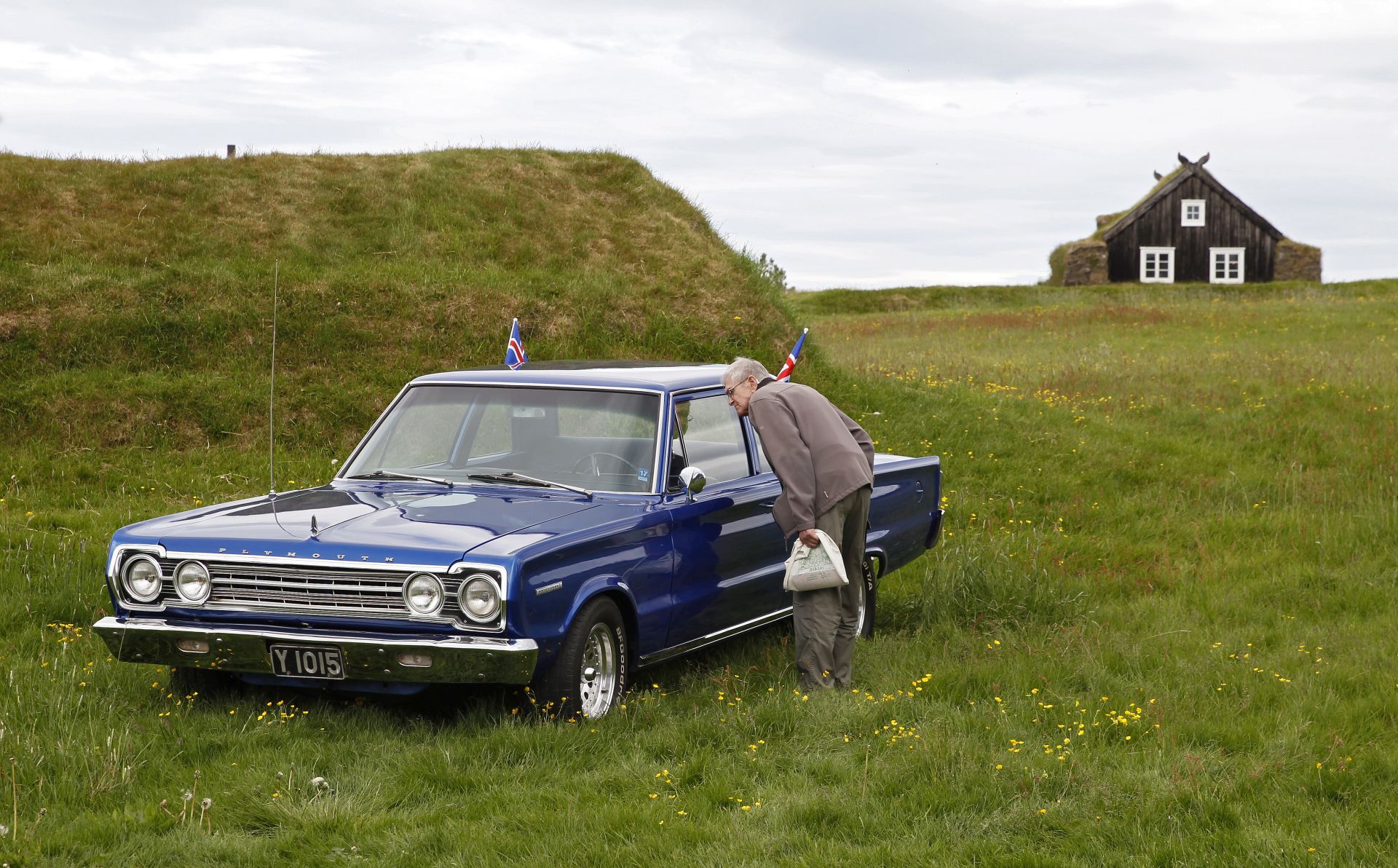
Árbær. Árbær Open Air Museum is a collection of 20 old Icelandic buildings, most of them furnished. You can stroll through the past and experience the way Icelanders used to live. You can visit restored homes, where traditional crafts are displayed. It contains the only still existing turf house from Reykjavík, Árbær turf farm. There is also a turf church, constructed from timbers of an old church at Silfrastaðir in Skagafjörður, dating back to 1842.

There are more turf houses and turf house replicas in Iceland. Contact the What’s On tourist information centre for more information.